We didn’t start Nana to build another app and add to the digital pollution. We started it because something is off in how female athletes train, understand, and feed their bodies. We call ourselves activists, and we love to surround ourselves with like-minded souls.
When we met Natascha Knaven-Den Ouden, we instantly knew we had found a match. Natascha is the founder of NXTG Racing, a development cycling team focused on the next generation of female riders. She raced professionally and later co-founded AG Insurance, an elite women’s team. Today, she’s working to change women’s cycling from within.
We caught up in Breda, at her daughter’s favourite post-ride cafe for a chat about sustainable growth in women’s cycling.


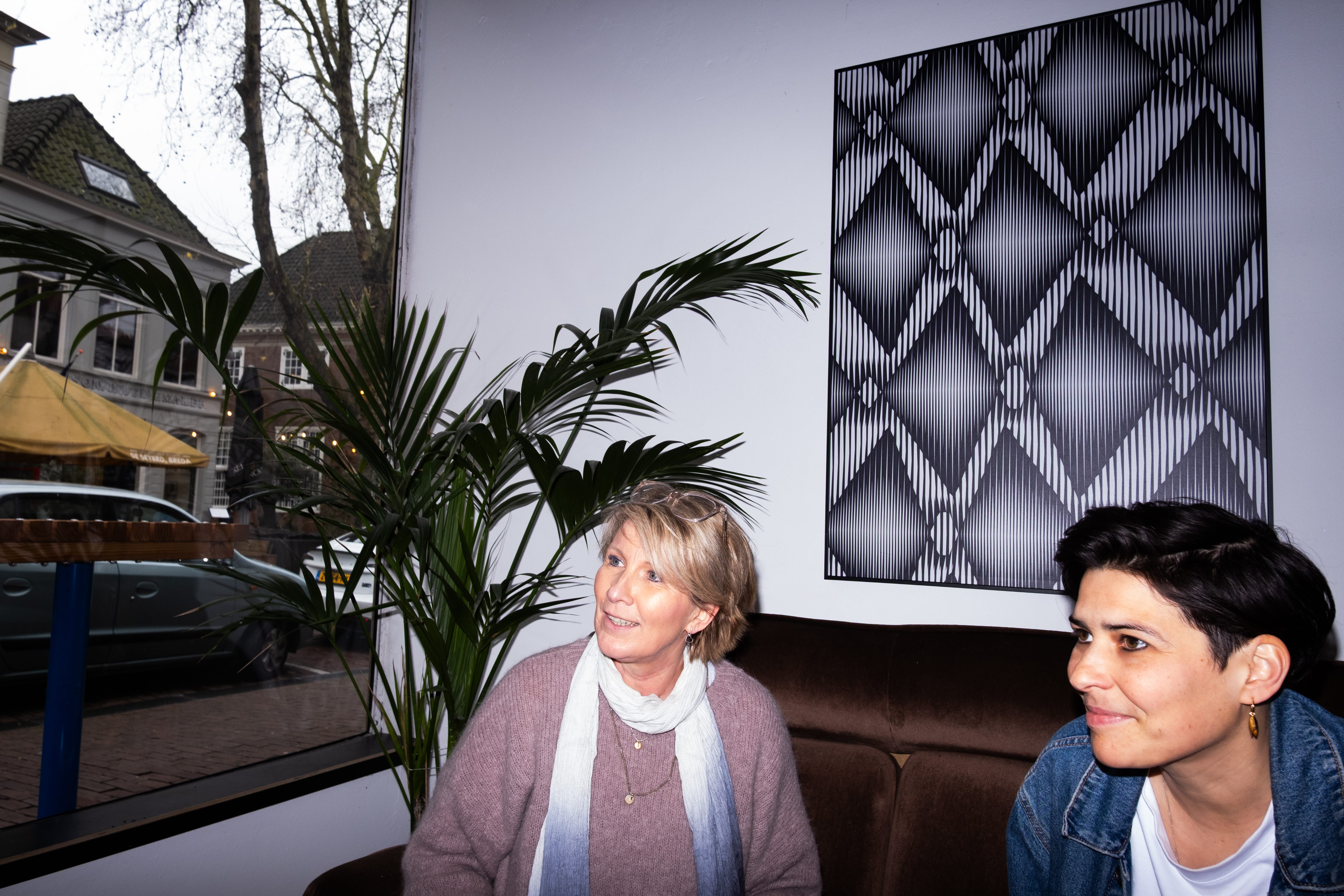
When we arrive, she is already seated cosily on the couches in the corner, and she greets us with her “bed glasses” on, an enthusiastic wave and a warm hug. We immediately know we’re in for a ride (pun may be intended).
Asked to introduce herself, she jumps right to the chase. With fiery eyes and passionate hand gestures, she tells us she started the NXTG Racing Cycling team for a very specific reason. To close the gap between youth development and elite women’s cycling. Because that gap is where promising careers go to die.
the top of the piramide is strong
For those of you who are not familiar with or addicted to women’s cycling, here’s some important context. Women’s cycling has been on the rise for a decade, but the first edition of the Tour de France Femmes avec Zwift in 2022 was a crazy amplifier.
At the top level, female cycling is booming, or at least it seems to be.
But if you pay close attention – and we can only recommend you do because the women’s races offer more suspense than the men’s these days – you’ll notice the peloton is smaller, tactics are different from men’s races, and riders come from all kinds of professional backgrounds. Sometimes you’ll even see riders still learning core skills mid-race, even at the Tour de France.
This is exactly what Natascha is referring to.
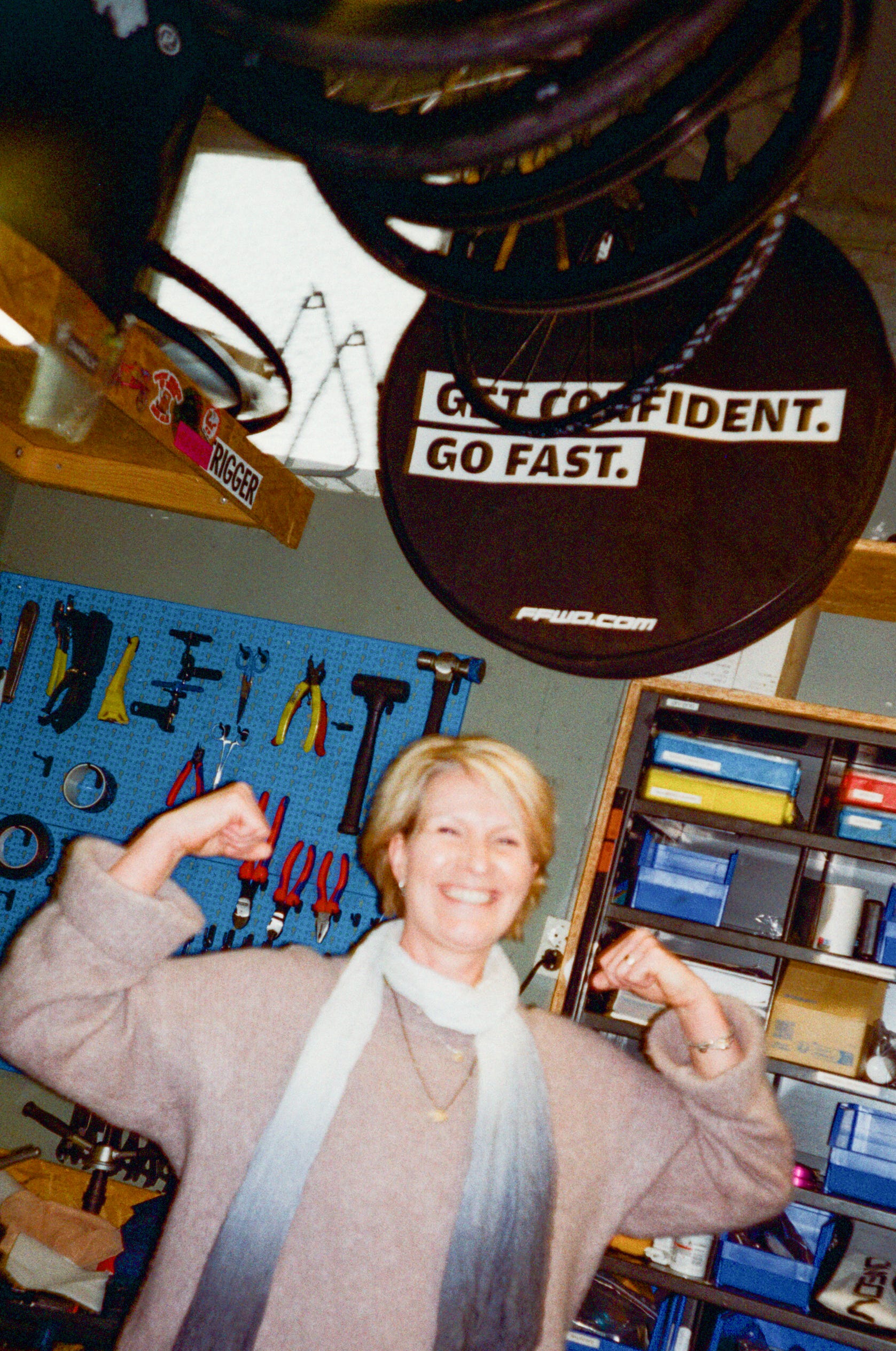
As we sip our oat milk lattes, Natascha tells us she wants to focus on what needs to happen before riders enter the spotlight of these huge races. She wants to build and support a system that enables young female riders to grow in the sport.
“On the front, everything is growing. But underneath, the structure is disappearing.”
In layman’s terms, the platform for riders aged 19 to 23, a crucial time for development, is near non-existent. There is less budget, fewer teams, and fewer races, but the demands from federations and governing bodies keep growing.
Natascha reminds us to have lunch – because eating is important, and how could we forget?!. While we place our orders, we ask her what ignited the fire to devote so much of her time and energy to what seems like a Herculean task.
“It started with my daughters (Natascha has 4 daughters). When the oldest decided to race, the others followed, and suddenly, we were inside the system, not observing it from the outside, but experiencing it day by day.”
That’s when she noticed some things just did not make sense in the women’s peloton.
“A lot of the structure, assumptions about training, performance and physiology have been imported from men’s cycling, but nobody really ever questioned whether that fits.”
Stuffing our faces with carrot cake (carbs are queen, never forget), we shift the conversation towards health. Natascha recalls one of her daughters losing her period during an intense training period and visiting a doctor who, offhandedly, claimed this to be “normal”. For the longest time, hormonal health has not been taken seriously or even considered. And even now, it is still relatively new and uncomfortable for some.
“thinning is winning”
Add to that the ever-dominant focus on weight, and you have a very dangerous cocktail that could cause an entire generation of female athletes to suffer lifelong consequences of a career in sports.
Especially in endurance sports, the slogan “thinning is winning” unfortunately still echoes rather loudly. Natascha points out that, surely, being “lighter” could improve short-term performance. However, this is a short-term gain, and it comes at a high cost. Low energy availability affects recovery, increases injury risk, disrupts hormone levels, and inevitably leads to performance declines, even if not immediately.
With NXTG Racing, Natascha is building something different. She’s developing riders who understand their bodies, recognise signals early, and who know that nutrition and recovery are foundational to a successful career.
“If that foundation is there from a young age, it becomes much easier to make the right decisions later, even under pressure.”
But as Natascha points out, it’s not just about individual choices, it’s cultural. Young athletes (and amateurs, for that matter) don’t just follow instructions. They observe to see what works and copy that behaviour. With the recent ‘return to skinny’ narrative creeping back into pop culture, the risk is that sport will follow. But food is life. Especially if you want to train, recover and perform at the highest level.
Zooming out, the challenge women’s cycling (and maybe women’s sports in general) faces goes well beyond coaches, teams, and athletes. The challenge lies in creating a culture, environment, and systems that enable the continuous, sustainable development of raw talent.
manifestation of a next gen
When we ask Natascha what she hopes for the next generation of female riders, she tells us it’s twofold. Firstly, she hopes for equity. A levelled playing field where every rider has the tools and the support to reach their full potential. Secondly, she hopes to see a shift in what athletes value most. Focusing less on appearance and more on appreciating your own strengths, your teammate’s strengths, and reinforcing those together.
Our time with Natascha is coming to an end, and before she crosses the street to pick up a loaf of sourdough (carbs, remember?!), we ask her what she has taken away from her own time as an elite athlete. Peering through her bed glasses, she tells us that discipline and goal-setting are first and foremost. But also the risks of always pushing the boundaries. As an athlete, you constantly flirt with the edge. Learning what a healthy balance looks like and doing sports without the rush of competition are things she is still working on.
We leave Breda with a big smile on our faces, a selfie with a bunch of sourdough loaves in the background, and the determination to keep reminding women that fueling is not optional.